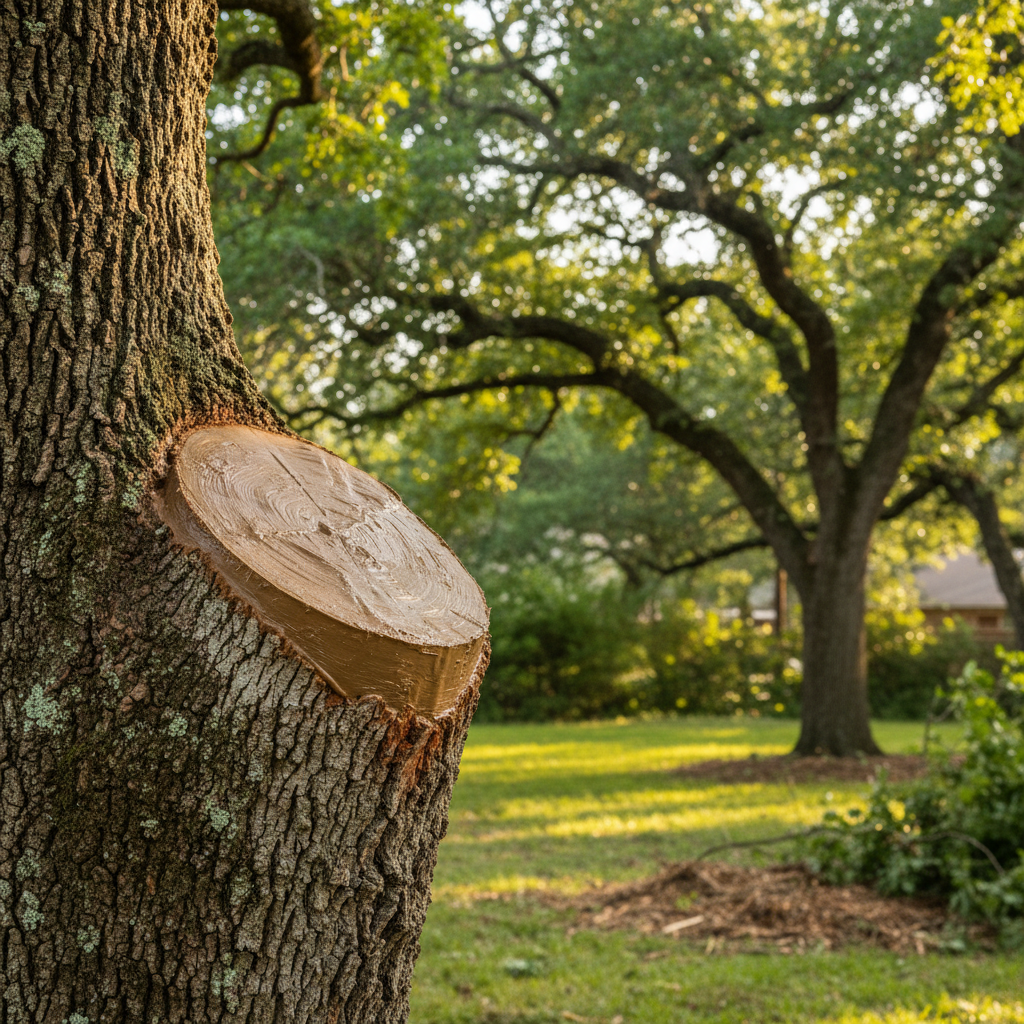
What's the best way to water my trees in our La Vernia climate?
This is probably the most common question I get, and it's a good one, especially with our hot, dry summers here in La Vernia. Forget those short, frequent sprinkles. That just encourages shallow root growth, and when a real drought hits, your tree's in trouble. What you want is deep, infrequent watering. I tell folks to water deeply once a week, maybe even every two weeks, during dry spells. We're talking about letting the hose trickle for a good hour or two around the drip line – that's the area under the outer edge of the branches. You want that water to soak down a foot or two into the soil. For younger trees, you might need to do it a bit more often, but always deep. Established trees, especially our native oaks, are pretty tough once they've got a good root system, but even they appreciate a deep drink when the ground's like concrete.
How do I know if my tree is sick or just stressed?
It can be tough to tell the difference sometimes, but there are some tell-tale signs. Stress usually shows up as general decline: leaves turning yellow or brown prematurely, smaller leaves than usual, or just an overall lack of vigor. This often comes from not enough water, too much water, compacted soil, or even construction damage to the roots. Sickness, on the other hand, often has more specific symptoms. You might see cankers on the bark, unusual spots or growths on leaves, sudden branch dieback, or even insect frass (that's bug poop, by the way) on the trunk. If you're seeing things like that, it's time to call someone like me to take a closer look. Early detection can save a tree, so don't wait if you're worried.
When's the best time to prune my trees?
For most deciduous trees – that's trees that lose their leaves in winter – the dormant season is ideal. So, late fall after the leaves drop, through winter, and into early spring before new growth starts. Why then? Well, the tree's not actively growing, so it's less stressed by pruning. Plus, without leaves, you can see the tree's structure much better, making it easier to make good cuts. There are exceptions, though. Oak trees, for instance, should only be pruned in the coldest winter months (typically November through February) to avoid attracting the beetles that spread Oak Wilt, which is a real problem in Texas. Fruit trees have their own specific timing too. If you're just removing dead or hazardous branches, you can do that any time of year, but for major structural pruning, stick to dormancy.
What's the deal with tree topping? Is it ever okay?
Absolutely not. Never, ever top a tree. I can't stress this enough. Topping is when someone cuts off the main branches or leader of a tree, leaving stubs. People think it makes a tree smaller or safer, but it does the exact opposite. It creates a bunch of weak, fast-growing sprouts that are prone to breaking. It also stresses the tree terribly, opens it up to disease and pests, and often leads to the tree dying within a few years. It's a hack job, plain and simple. If your tree is too big for its space, or you're worried about power lines, there are proper pruning techniques – like reduction pruning or crown thinning – that can achieve your goals without destroying the tree. If someone suggests topping, send them packing and call Allgreen Tree. We'll give you honest advice.
My tree has cracks in the trunk or branches. Should I be worried?
Yes, you should definitely be worried. Cracks, especially vertical ones, can be a sign of serious structural issues. They might indicate internal decay, stress from environmental factors like frost or drought, or even a tree trying to split apart. Sometimes, a small crack might just be superficial, but often, it means the tree's integrity is compromised. If you see a crack, especially if it's deep, wide, or accompanied by other symptoms like leaning or dead branches, you need to get it inspected by a certified arborist. It could be a hazard, especially if it's near your home or a frequently used area. We can assess the risk and recommend whether cabling, bracing, or removal is the safest option.
How do I protect young trees from harsh weather or pests?
Young trees are like babies; they need a lot of care to get established. For our La Vernia sun, consider a tree guard or even a simple piece of cardboard on the south-facing side of the trunk to prevent sunscald. Mulch is your best friend – a 2-4 inch layer of organic mulch (like wood chips) around the base, but kept a few inches away from the trunk, helps retain moisture, regulate soil temperature, and suppress weeds. As for pests, healthy trees are more resistant, so proper watering and mulching go a long way. Keep an eye out for common issues like aphids or borers. If you see signs of insect damage, identify the pest first, then look for targeted treatments. Sometimes, a strong spray of water can knock off aphids, but for more serious infestations, you might need a specific insecticide. Just be careful and always follow label directions.
Should I fertilize my trees, and if so, when and how?
Most established trees in a healthy landscape don't actually need regular fertilization. They usually get enough nutrients from the soil, especially if you're using mulch that breaks down over time. However, if your tree is showing signs of nutrient deficiency – like pale leaves, stunted growth, or a general lack of vigor – then fertilization might be beneficial. The best time to fertilize is usually in the fall or early spring, before new growth really kicks in. You'll want to use a slow-release granular fertilizer specifically formulated for trees, and apply it around the drip line, not right at the trunk. Always get a soil test done first if you can. That'll tell you exactly what nutrients your soil is missing, so you're not just guessing. Over-fertilizing can actually harm your tree, so more isn't always better. If you're unsure, give us a call at Allgreen Tree, and we can help you figure out if your trees need a boost.